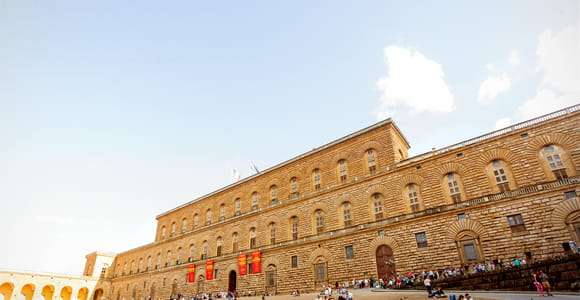
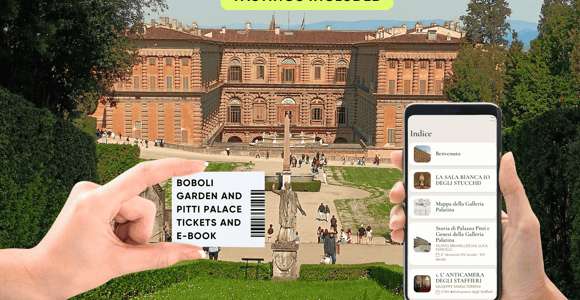
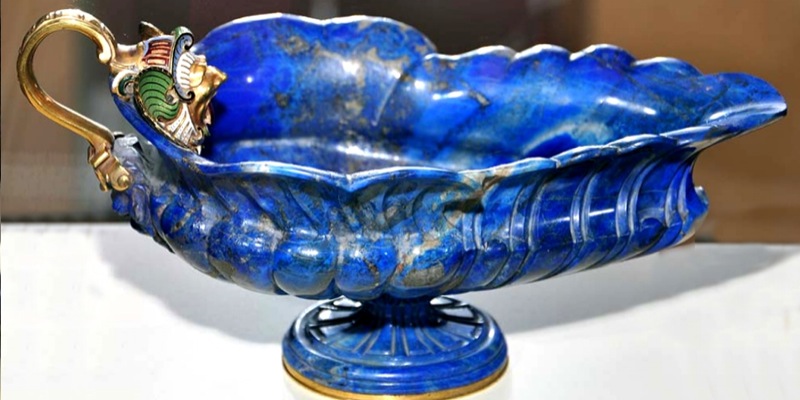
The Silver Museum is part of the Pitti Palace complex in Florence. Located in the north wing of the palace (summer apartments accessible from the Buontalenti courtyard), it was established in the second half of the 19th century. The museum is also referred to as the Medici Treasure, although some pieces date from the later period of the Lorraine, and it contains a vast collection of priceless items of goldsmithery, silverware, cameos, crystals, and works in ivory and semi-precious stones. Today, with the same ticket, visitors can access the Silver Museum, the Boboli Gardens, the Costume Gallery, and the Bardini Garden. Room II on the ground floor contains the oldest works from the collections of Lorenzo the Magnificent, such as the collection of ancient vases (Roman, Sasanian, and Venetian), often featuring delicate silver inlays added in the 15th century. Among the most precious pieces in this section are a Byzantine chalice, a double cup made of amethyst, and a porphyry work depicting Venus and Cupid by the Pescia artist Pier Maria Serbaldi, known as 'il Tagliacarne'. Room III houses a wooden relief from the 16th to 17th century, while Room IV is decorated with frescoes by Giovanni da San Giovanni, executed between 1634 and 1642. Room V was an ancient small chapel with splendid goldsmithing for worship. Rooms VI to XII, facing Piazza Pitti, were the summer apartments of the Grand Duke and still present the precious frescoes by Angelo Michele Colonna and Agostino Mitelli, painted between 1634 and 1641 in rooms VI to VIII. Among the most valuable pieces in these rooms are: works in ebony and inlaid semi-precious stones, such as the Stipo d'Alemania, coming from Augsburg as a gift from the Archduke of Tyrol, and a similar kneeler; a cabinet and a reliquary of Dominican saints by Giovan Battista Foggini; turned ivory vases of German craftsmanship and one by Giovanni Antonio Maggiore from Milan, which is the oldest known piece in this artistic specialty (1582); a table and a cabinet, masterpieces of Dutch cabinetry; a magnetic compass donated by Tsar Peter the Great to Cosimo III; vases and cups in semi-precious stones and rock crystal with bizarre and unusual shapes. On the ground floor is the exceptional collection of Oriental porcelain, with over 1,000 specimens, mostly of Medici origin, recently enriched by the Scalabrino collection: as many as 127 pieces from the 17th and 18th centuries, all of very rare quality in the European panorama. The exhibition continues in the mezzanine, where collections of cameos, jewelry, trinkets, liturgical and table silverware, and exotic artifacts are located. Here is also arranged the collection of gold and silver artifacts from Germany brought by Grand Duke Ferdinand III after his exile ended in 1815, caused by the French occupation. In the two rooms that housed the porcelain, new display cases have been created and the jewelry reorganized, supplemented by new acquisitions through donations and loans, mainly contemporary artifacts. Finally, a small room, the last one facing the inner courtyard of Ammannati, has been dedicated to the collection of Baroque miniatures, with over 120 pieces.
Are you a local? What do you think about Argenti Museum - Palazzo Pitti?
Login to suggest it!



















 Find the best hotel offers and save up to 80%