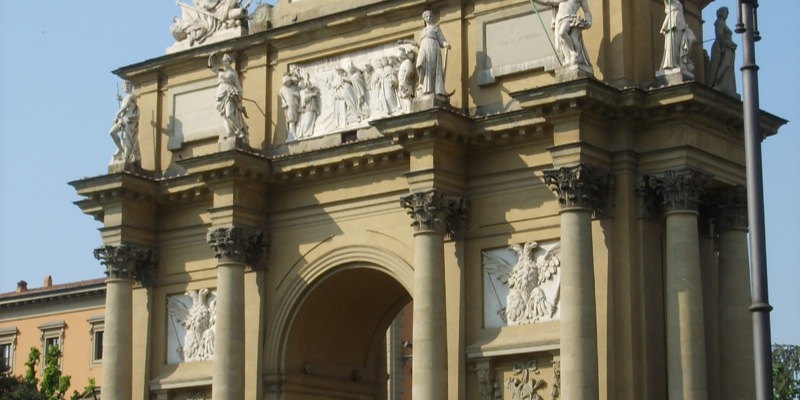
The Arch of Triumph is an architectural monument in Florence located in Piazza della Libertà. Built in the eighteenth century by architect Jean-Nicolas Jadot, the construction involved contributions from architect Schamant and decorative artists from the Florentine Academy, who created statues of mythological deities. The arch, situated at the northern entrance of the city just outside Porta San Gallo, was meant to celebrate the entry of the House of Habsburg-Lorraine following the extinction of the Medici dynasty. It was erected in 1737, during the so-called regency period (1733-1765), when the new Grand Duke Francis Stephen obtained the grand duchy somewhat against his will and visited it on January 20, 1739, but avoided residing there. When he became emperor in Vienna, his second son, Peter Leopold, inherited the Tuscan crown, which he took possession of with dedication. Being an enlightened ruler, he found such celebratory works superfluous. The architecture of the arch is generally considered excessively showy and rhetorical, with the Habsburg eagle dominating the decorations, accompanied by a series of bas-reliefs depicting the triumphs of the Habsburgs and grandiose Latin inscriptions. By a curious twist of history, the Lorraine dynasty made both their entrance and exit from the city always through the arch: on April 27, 1859, Grand Duke Leopold II left the city through Porta San Gallo, being sent off with all honors by the Florentines who bid him farewell with the cry "Farewell, Father Leopold!" A plaque placed on the inner side dated November 11, 1916, dedicated to King Victor Emmanuel III, emphasizes the power assumed by the people following the Unification of Italy, in contrast to the dictatorial power of the ancient regime that the arch would represent. The Grand Dukes, accused of 'murky' tyranny, were however direct ancestors of the Savoy monarch. With the creation of the ring roads between 1865 and 1871, the arch found itself at the center of a pedestrian island surrounded by roads and a system of porticoes that are among the most complete achievements of architect Giuseppe Poggi, who supervised the urban planning project. In the small park-pedestrian island, the ancient Porta San Gallo, part of the old walls, is also enclosed, in front of which a circular fountain was built to separate it from the Arch of Triumph.
Are you a local? What do you think about Arch of Triumph?
Login to suggest it!












 Find the best hotel offers and save up to 80%